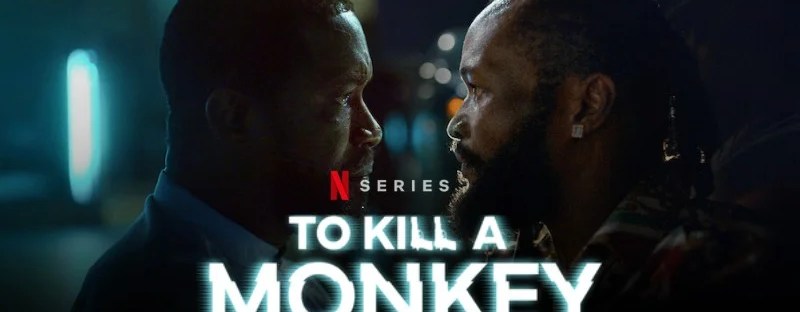
In many respects, Nigerian producer/director Kemi Adetiba can be described as the most influential person in Nollywood in the last decade. Two of the films she directed, The Wedding Party (2016) and King of Boys (2018), became cultural touchstones and inspired a dozen or more other films that borrowed heavily from their themes and narrative structures.
So, when the Nollywood public got to know that Adetiba was making another film, expectations were understandably high. This was notwithstanding the mixed reactions that trailed her latest offering in the King of Boys franchise, The Return of the King, a rather underwhelming limited series that left many questions unanswered about the ability of Nigerian filmmakers to sustain storytelling across extended formats. These concerns mostly frame my expectations of To Kill a Monkey, Adebita’s newest film series.
Stripped of its glitzy visuals and inventive music, To Kill a Monkey is, at its core, a clichéd film. The storyline is overly familiar: the figure of the young person undone by a system that instructs diligence in school with the promise of post-graduation reward, only to renege on that social contract. In almost all of Nigeria’s history, this is the standard narrative and the most potent trigger for the japa waves. In this way, Efe, the central character in To Kill a Monkey, is an everyman, an every Nigerian. For the unemployed, or the underemployed, as in the case of Efe, what remains is often a desperate search for an exit route, one that usually leads to crime.
To be clear, the familiarity of a narrative does not prevent a film from being a good watch. The fact that the Nigerian state’s obvious problems continue to defy the mental and moral capacities of its leaders is a reason it still yields powerful stories. Moreover, despite the bungling failings of their leaders, Nigerians have devised a myriad of creative strategies to cope with the Nigerian state. Nollywood and Afrobeats are examples of these creative strategies.
But to return to To Kill a Monkey: its most fundamental weakness lies in its inability to rise above the cliché, even when there are clear narrative and thematic opportunities to do so.
A viewer with even a modicum of critical awareness anticipates the direction of Efe’s story from the outset. It is obvious he will either be tempted into crime or stumble into a stroke of good fortune, à la Nollywood’s tired method. The former is chosen for To Kill a Monkey. Efe (William Benson) is reacquainted with Oboz (Bucci Franklin), an upstart crime boss who operates a network of shops doubling as hubs for internet fraud, Yahoo Yahoo, or as it is framed in the West, the “Nigerian Prince” scam.
What follows this straightforward narrative arc are what might be described as Adetiba’s familiar contrivances, previously deployed in King of Boys: the grafting of the Nigerian condition onto stylized scene templates borrowed from American gangster films like The Godfather and Scarface. A creative tension emerges from this strategy, one that, while generating heart-thudding scenes and cinematic bravado that excite a fair share of viewers, ultimately bears out its limitations.
Across the eight episodes of To Kill a Monkey, what surfaces is a pastiche of underdeveloped subplots: the female inspector’s troubled idealism, the digital underworld of internet fraud, the cannibalistic teacher’s arc, among others. These narrative threads feel hastily assembled, insufficiently explored, and have been curated to achieve histrionic impact rather than for narrative coherence. Efe appears to serve as the adhesive tying this miscellany of characters and their stories together. Still, one is left wondering if that is enough to hold the series together in any meaningful way.
Performance-wise, Efe brings an understated realism to his role, as he embodies the anguish and desperation of Nigeria’s disillusioned youth. Although Efe is a middle-aged man in the film, he is trapped in the vicious cycle of botched promises of success after education that begins in youth for Nigerians and that never ends. His performance lends the series its emotional plausibility.
Franklin, in playing Oboz, joins the familiar rank of gangster archetype that Adetiba likes to utilize. His character is inflected with the cultural and inventive pidgin flavor of the Niger-delta region, particularly Benin-Warri, which helps save it from tired Lagos cliché. Franklin embodies these peculiarities to some great flourishes. Although Bimbo Akintola’s performance as Inspector Ogunlesi is intriguing, one is left wondering if the uneven script hampered a fully realized character’s arc. The same can be said of the rest of the cast.
While Adetiba’s ambitious vision continues to open up the inherent potentials of Nollywood, To Kill a Monkey suggests that it may be time to step away, at least for some time, from the gangster template. It is time for Nollywood filmmakers to shift their focus to the pressing societal issues that To Kill a Monkey merely sidelines as subplots.
 Tobi Idowu