Category: My Posts

  • Meeting Abdulrazak Gurnah the First Time

    Meeting Abdulrazak Gurnah the First Time

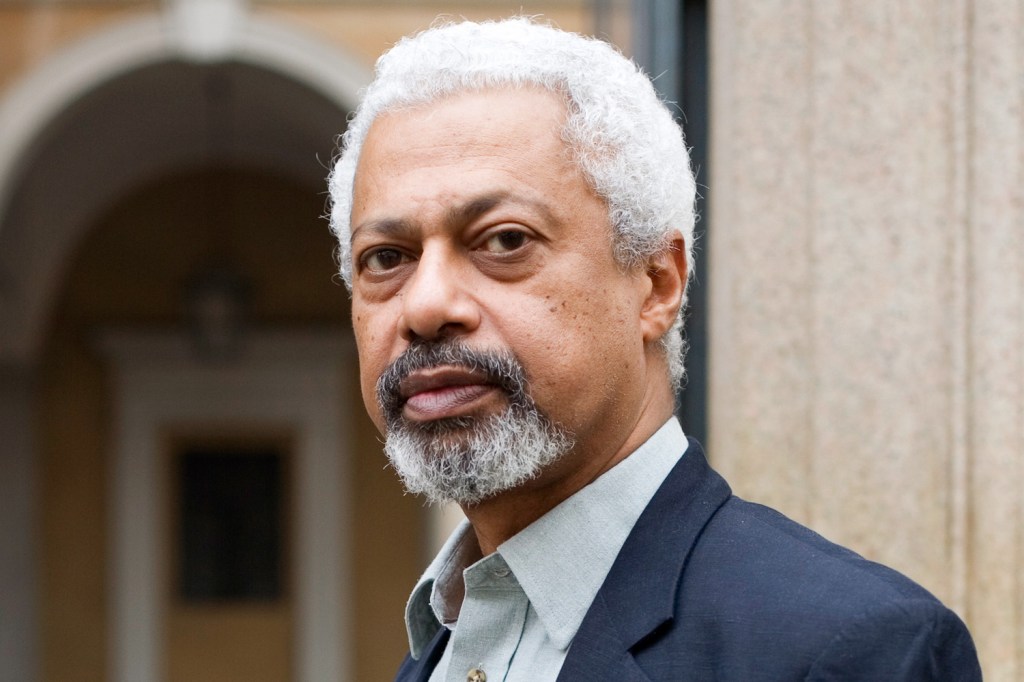
    Abdulrazak Gurnah was a name I did not know until recently. Until the Nobel Committee in Norway announced him as this year’s winner of its prize in literature, I had no inkling whatsoever who the man was, nor what he represented or could represent for Africa and the literature that reflects its motley realities.

    In fact few weeks before, his name had slipped under my curiousity-crazed radar when Ake Arts and Book Festival announced him on Twitter as its headliner for this year’s event. I merely checked his name, stayed few forgettable seconds on the flyer and got caught immediately in the other buzzes that are generated almost per second on that social network.

    His Nobel citation, that inimitable short bio-flashlight, thus became my entry point to the knowledge of another, if unexpected African literature Nobel laureate. Another, because we always believe we have got deserving laureates-in-waiting, never mind if externalizing affirmation of life-long literary worth isn’t exactly decolonizing. Unexpected, because “for his uncompromising and compassionate penetration of the effects of colonialism and the fate of the refugee in the gulf between cultures and continents” reads close to what an African (or broadly speaking postcolonial) writer could have dedicated their writerly life to.

    My immediate reaction to his win bordered on perplexity and would shift to saddening shame, only redeemed somewhat later-later when it was clear that nobody seemed to know the man, except very few whose knowledge of him could never have nudged them to think he’d ever be considered, let alone announced as winner of the Nobel. My own perplexity and shame hinged solely on a realization that I did not encounter Gurnah at all across two degrees pursuits at arguably the most important university in the discourse of African literature.

    It immediately hit me of course, and I had long known, that African literary discourse has long been shifted to the West, more like to the United States. Yet it was clear that Gurnah was an almost unknown entity in that place. You could however bet that had they decided to know him before his Nobel win, I might have known him back while I was in school. Many people, who have no academic interest in literature, would have known him too. So the West became the consequential home of African literature, now shapes its discourse and decides who and what will be the subjects of that discourse?

    To say African literature syllabus in Africa is dated might be a reach, but I have long thought it could do with more variety than they presently offer. I’d not write about how I might be able to list and talk about more English writers across various traditions and eras than that of Africa. But I meant variety in terms of shifting the grounds of themes and canons beyond the Makerere’s group.

    Having experienced that syllabus first hand, I know beyond the Makerere group, what you’d get are mostly Western-determined concessions to few superstars that represent a detour from the Makerere’s debates. Novelists as case study: definitely Emecheta, maybe Mariama Ba; definitely Adichie, maybe Sefi Atta or Chika Unigwe to form a binary. Ben Okri is like a canon and he might be placed in relation to many hard-to-know writers around the time he published The Famished Road. Teju Cole, and either of Taiye Selasi and NoViolet Bulawayo to scantily explain the Afropolitan bug. Adichie is a ready and utilitarian pick because beside feminist consideration, they might use her for contemporary reflection of wars that tore Africa in the aftermath of Independence. She has even given us a migrant story too!

    The limited scope of Makerere-over-determined literature syllabus is why Gurnah could slip under the radar in Africa for many years. In my utopian world, his announcement would have presented African scholars and every other person involved in literary activity on the continent a chance to stick it to the West of how skewed its interest in our literature was. Imagine if the conversation had been, “well we’d always studied him and known him as a great story teller of the African experience” and not his obscurity?

    You could hardly get a think-piece from Africa that introduces people to him ever since his announcement. As ever, we waited to have it told to us. Just Google search him, it’s being told to us right now. Gurnah would now take a spot of consideration going forward in literary conversations on the continent, and students would choose his book for their long-essays. But there are many Gurnahs and we’d wait for another discovering of them by the West?
  • Aborted? reflection, home, America: ramblings

    Aborted? reflection, home, America: ramblings

    I’ve been meaning to begin a series of reflections about my traveling to the United States. I actually planned to begin writing the moment I landed; at most, a week after. But I procrastinated. And then other things quickly happened. I procrastinated further. Then I got the most unbearable news ever. I became disconsolate and would not think of anything beyond how utterly unfair life is set. I have had a lot of thoughts jostling one another for my attention in my mind ever since I got that terrible news, too. There was a time my mind could only preview morbid thoughts. I had a stricken urge to reread Mariama Ba’s “The Joys of Motherhood.” No! That belongs to Emecheta. Well, seems this exploratory writing could actually work. So, as part of the processes here at BGSU to get teaching associates to be up to speed and well prepared to teach the two writing courses by University Writing Program, we’re also require to take a course, Instructor Writing Program. I find it funny though that we had a 2-week orientation that basically previews what we are meant to do and and then we are thrown into the world of teaching, designing our syllabuses and all sundry of backend teaching affairs. I am digressing a lot. I should go back to exploratory writing. So, in that Instructor’s workshop course, first part of it previews a unit we’d teach this semester and provides us with helpful tips and suggestive readings we might use (You’ve got leeway to select other materials insofar it helps to pass the central theme of the course to the student). The second half previews next semester’s course. So in one of the required books for Instructor, the concept of Exploratory writing is discussed. I wouldn’t have thought that a lot scholars had devote and still devote their serious time to reflecting on freewriting, basically unorganised jotting down of ideas. So the juice of the reading is that when used, it could help to generate ideas which could be original. And it could help students if instructors skillfully encouraged it — some incentives might go a long way to help students though. I have found the idea of thinking through informal writing helpful. Even though I have done it in the past-everyone would probably have sat down and type/write on without much attention to such holds like grammar, and organization…. our thoughts might ramble on. But it could help us snap out of writer’s block. It could help us write or type something interesting out of the blue. But like C. Bean (the author of that book that talks about exploratory writing) says, although it is an unstructured, basically unorganized freewriting, there should be method to that madness! Like you should have a central subject you want to freewrite about. For instance, I placed my fingers on my keypads with the mindset of thinking through why I had failed to begin my American odyssey’s reflections! I have many things to write about. I want to write about my last moments with my family at the International? airport in Lagos….my JJCism that prevented me from saying a proper goodbye to them…the humanity of Barnabas who offered me his phone to call them, even when they were like me still in the airport. I want to write about that too-silent, eerie moment in the air when I had the urge to shout that I wanted to get down…how I furiously type to my Faith, via WhatsApp how much I loved her and how the thought of our separation struck me hard at that moment. I want to write about the stopover at Qatar…my immediate thoughts about US (and how my mind wanted to draw parallel between what I felt and what Ifemelu in Adichie’s Americanah first felt)….what the news of my mother’s death did to me and how my inability to go home felt like a coming to past of the many prophesies I have gotten from reading migrant literary texts…I want to write. A lot. I hope this rambling writing would have snapped me out my procrastination!

    NB: This post first appeared on my medium page and I have decided there’s no point going over what I typed to edit it since it’d have defeated its purpose.

  • I begin

    I begin

    A form of digital diary and draft sheet, I’ve opened this site to share my thoughts when they need public outing. I’ve run different blogs at different times in the last decade – I should try to get their posts here one of these days. Really, I intend to start a new journey here where every of my online activities and writing/research projects could be archived. Again, I begin.