Category: My Posts

  • Remembering Saint Janet 

    Remembering Saint Janet 

    I learned of the death of Saint Janet, the Yoruba juju musician, on Sunday, August 2, 2026. I had been absentmindedly scrolling through X, as I often do on weekend mornings, when I came across a post that casually announced that she had died. My first instinct was disbelief, and I immediately searched her name on Google, which was unhelpful at the time. The only links that came up all pointed back to Facebook posts. 

    By Sunday afternoon in the US, the news had become a major talking point on Nigerian social media. TikTok, more than any other platform these days, often captures the mood of the Nigerian internet. Expectedly, on that platform, some people had already begun turning the news into content. Even with the deluge of contents online, as of my writing this post, there has been little to nothing written about Saint Janet’s life, her music, or the circumstances of her death.  Here, I will note Dami Ajayi’s thoughtful post on X, which tries to capture what her music meant to a generation of listeners. 

    I also do not know much about her life, hence why I have been Googling her name every now and then since the news of her demise hoping to finally catch a befitting obituary. 

     I must have first listened to Saint Janet (real name, Janet Iyun Ajilore) sometime around 2010. I was in the final year of secondary school. After classes, instead of going straight home, a group of us would head to a football field near one of our classmates’ houses. We’d play for hours, sometimes betting money on which team would win. Between matches, someone would bring out a phone. While phones were technically banned in school, students usually hid them until the closing hours, and we’d play music on the  phone while playing football.  

    One day, one of the boys insisted we listen to a particular song, but that we should turn the volume down. It was a woman’s voice, but what she was singing caught all of us off guard. Up until then, the closest thing I had heard to that kind of raw, sexually explicit music was Abbas Obesere. As teenagers, we knew Obesere was “not for children.”  But Obesere’s music, at least to my ears then, always felt loud, confrontational, almost as if he was daring listeners to accept him on his own terms. 

    What struck me about Saint Janet, by my first encounter, was that her style was cohesive, melodious and easy to get into. There was nothing about her style that felt harsh, which made her songs easy to enjoy, even when what she was singing about offended many older, more puritan listeners. I really cannot remember the title of that particular first song of hers that I listened to, but what it did was to make me an obsessive devotee to her music for the next few years. 

    Looking back now, I think her songs did something tremendous for boys my age. We were entering adulthood and curious about everything adults refused to talk about openly: sex and alcohol; desire and pleasure. Saint Janet, or Mama Yabis as she was fondly called, sang about all of them with a confidence that was almost unbelievable at the time. She made those subjects sound ordinary and funny in a society where they were often wrapped in silence or moral panic. 

    I did not grow up in what Nigerians would call a spiri-coco (overtly religious) home, but the wave of Pentecostalism that swept through Nigeria in the 2000s certainly shaped the atmosphere around us. I remember Juju and Fuji cassettes my father had fanatically listened and danced to in the 80s gathering dust in his shelf like relics of certain age. While he did not take fancy towards mainstream Christian musicians of the 90s and early 2000s, he would reach for a compromise in Yinka Ayefele whose style balances Juju rhythm with some watered-down Christian vibes.  

    However, Saint Janet went in the opposite direction to Ayefele. What I found fascinating then was how she borrowed the tune and lyrics of Yoruba Christian praise songs before gradually steering them somewhere completely different. She would begin almost like a worship leader, then slowly ease into songs about sex, drinking and gossip. She had a distinctive timbre, and she knew how to pull listeners in before veering into her titillating subjects. She undoubtedly shepherded the flock of her Saint Bottles Cathedral, also known as Sinners’ Chapel, with her irreverent yabis masterfully.

    By my early 20s at the university, I had somehow stopped paying as much attention to Saint Janet as I did in my mid to late teens. Every now and then, news about her would filter into my social media feeds, but I would simply read it and move on. Recently, though, TikTok drew me back to her. As it often does, the algorithm kept serving me video-contents that used snippets of her songs. Before long, I would find myself on a nostalgic scroll, trying to remember songs I had not listened to in well over a decade. That is perhaps one of TikTok’s more interesting contributions to music culture. It has revived interest in songs many of us thought had long disappeared. 

    And that was exactly how I re-encountered Saint Janet few months before her death. More than a decade after I had stopped listening to her regularly, I found myself returning to her songs, partly to relive those secondary school years. Unfortunately, like many Nigerian artists of her generation, her music is still poorly archived online. Her songs are scattered across YouTube and other platforms, uploaded by different people, many of whom probably have no connection to her. And this is a sad testament to the poor documentation and the exploitative management/promoter systems that defined the pre-streaming era of Nigerian music. 

    As I have thought about Saint Janet’s death these past few days, I keep coming to how artistes like her become touchstones in the lives of their listeners. Long after you have stopped listening to them regularly, they remain tied to a particular period of your life. You remember them, and in remembering them, you remember a part of yourself too. I suppose that is one of the greatest powers an artiste can have. Rest in peace, Saint Janet. 
  • Kemi Adetiba’s To Kill a Monkey Review: Gangsterism and Nollywood Trap

    Kemi Adetiba’s To Kill a Monkey Review: Gangsterism and Nollywood Trap

    In many respects, Nigerian producer/director Kemi Adetiba can be described as the most influential person in Nollywood in the last decade. Two of the films she directed, The Wedding Party (2016) and King of Boys (2018), became cultural touchstones and inspired a dozen or more other films that borrowed heavily from their themes and narrative structures.

    So, when the Nollywood public got to know that Adetiba was making another film, expectations were understandably high. This was notwithstanding the mixed reactions that trailed her latest offering in the King of Boys franchise, The Return of the King, a rather underwhelming limited series that left many questions unanswered about the ability of Nigerian filmmakers to sustain storytelling across extended formats. These concerns mostly frame my expectations of To Kill a Monkey, Adebita’s newest film series.

    Stripped of its glitzy visuals and inventive music, To Kill a Monkey is, at its core, a clichéd film. The storyline is overly familiar: the figure of the young person undone by a system that instructs diligence in school with the promise of post-graduation reward, only to renege on that social contract. In almost all of Nigeria’s history, this is the standard narrative and the most potent trigger for the japa waves. In this way, Efe, the central character in To Kill a Monkey, is an everyman, an every Nigerian. For the unemployed, or the underemployed, as in the case of Efe, what remains is often a desperate search for an exit route, one that usually leads to crime.

    To be clear, the familiarity of a narrative does not prevent a film from being a good watch. The fact that the Nigerian state’s obvious problems continue to defy the mental and moral capacities of its leaders is a reason it still yields powerful stories. Moreover, despite the bungling failings of their leaders, Nigerians have devised a myriad of creative strategies to cope with the Nigerian state. Nollywood and Afrobeats are examples of these creative strategies.

    But to return to To Kill a Monkey: its most fundamental weakness lies in its inability to rise above the cliché, even when there are clear narrative and thematic opportunities to do so.

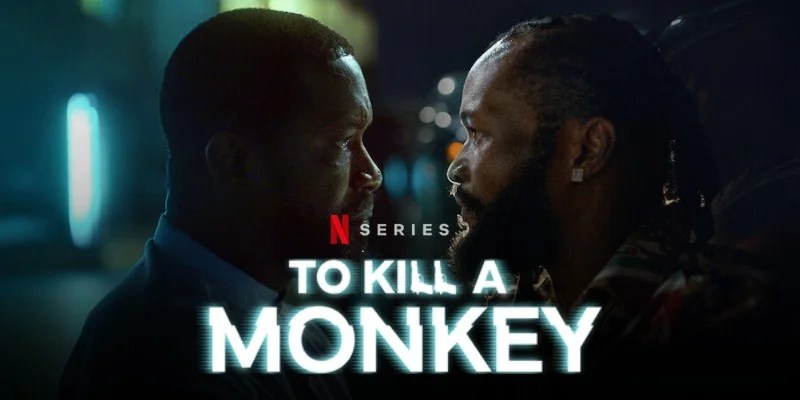
    A viewer with even a modicum of critical awareness anticipates the direction of Efe’s story from the outset. It is obvious he will either be tempted into crime or stumble into a stroke of good fortune, à la Nollywood’s tired method.  The former is chosen for To Kill a Monkey. Efe (William Benson) is reacquainted with Oboz (Bucci Franklin), an upstart crime boss who operates a network of shops doubling as hubs for internet fraud, Yahoo Yahoo, or as it is framed in the West, the “Nigerian Prince” scam.

    What follows this straightforward narrative arc are what might be described as Adetiba’s familiar contrivances, previously deployed in King of Boys: the grafting of the Nigerian condition onto stylized scene templates borrowed from American gangster films like The Godfather and Scarface. A creative tension emerges from this strategy, one that, while generating heart-thudding scenes and cinematic bravado that excite a fair share of viewers, ultimately bears out its limitations.

    Across the eight episodes of To Kill a Monkey, what surfaces is a pastiche of underdeveloped subplots: the female inspector’s troubled idealism, the digital underworld of internet fraud, the cannibalistic teacher’s arc, among others. These narrative threads feel hastily assembled, insufficiently explored, and have been curated to achieve histrionic impact rather than for narrative coherence.  Efe appears to serve as the adhesive tying this miscellany of characters and their stories together. Still, one is left wondering if that is enough to hold the series together in any meaningful way.

    Performance-wise, Efe brings an understated realism to his role, as he embodies the anguish and desperation of Nigeria’s disillusioned youth. Although Efe is a middle-aged man in the film, he is trapped in the vicious cycle of botched promises of success after education that begins in youth for Nigerians and that never ends. His performance lends the series its emotional plausibility.

    Franklin, in playing Oboz, joins the familiar rank of gangster archetype that Adetiba likes to utilize. His character is inflected with the cultural and inventive pidgin flavor of the Niger-delta region, particularly Benin-Warri, which helps save it from tired Lagos cliché. Franklin embodies these peculiarities to some great flourishes. Although Bimbo Akintola’s performance as Inspector Ogunlesi is intriguing, one is left wondering if the uneven script hampered a fully realized character’s arc. The same can be said of the rest of the cast.

    While Adetiba’s ambitious vision continues to open up the inherent potentials of Nollywood, To Kill a Monkey suggests that it may be time to step away, at least for some time, from the gangster template. It is time for Nollywood filmmakers to shift their focus to the pressing societal issues that To Kill a Monkey merely sidelines as subplots.

  • Teaching Oleku: Tunde Kelani’s Yoruba Classic for a New Generation

    Teaching Oleku: Tunde Kelani’s Yoruba Classic for a New Generation

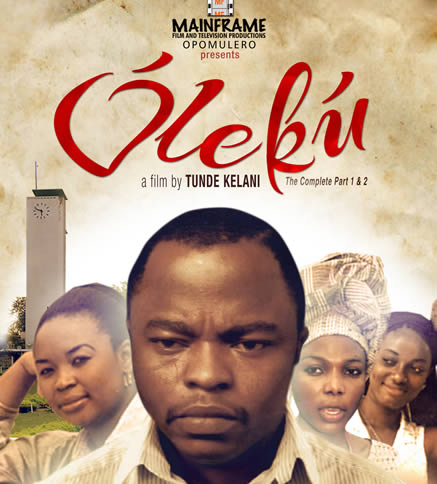
    When I started teaching this eight-week Yoruba class, I had modest expectations about the enthusiasm of my would-be students. They have, however, surprised me with their earnest curiosity as they have questioned, troubled, and teased out deeper meanings of the cultural texts I’ve put before them. As the class is ending next week, I’ve begun to reflect on the works we used in class. One of them is Tunde Kelani’s Oleku (1997), a film I first saw years ago and have now revisited through the inquisitive eyes of my students.

    My students are Americans, as I’m teaching in the United States, and about 90 percent of them are what language scholars call “heritage learners.” Their parents are native speakers of Yoruba, the language of the films we’ve been watching, so most of them already speak Yoruba at an intermediate to advanced level. Another detail worth noting before I get into Oleku is that the majority of my students were born at least five years after the film’s release.

    I’m not setting out to write a film review in the strict sense. What I want to share here are some quick reflections enriched by the experience of rewatching Oleku alongside students who are at least a decade younger than me, and with whom I share both a cultural bridge and a generational gap.

    My students loved, and were intrigued by, the story of Ajani (portrayed by Yemi Shodimu) and his triangular love entanglements with Asake (Feyikemi Abodunrin), Lola (Pauline Dike), and Sade (Omolola Amusan). They could relate to the steamy college romance theme, as it mirrors experiences they might be living through themselves. But they were especially struck by the weight of family expectations on Ajani, pressures that shape, and sometimes constrain, his choices. Beyond his apparent philandering, Ajani carries the heavy burden of a mother who constantly urges him to marry so she can become a grandmother and deliver that good tidings to his late father when she, too, joins the ancestors.

    Then there’s Asake’s father (Lere Paimo), who is a man whose rigid parenting is ironically tied to his embrace of modernity. He wants his daughter to attend university, which, in the 1960s postcolonial setting of the film, was seen as the ultimate pathway to producing “modern” citizens. Yet, while pushing her into the machinery of modernity, he clings to traditional fatherly authority, where his word is absolute.

    “I want her to graduate with my name on her certificate,” he tells his friend (Kola Oyewo). He refuses to accept the possibility, which is presented by his friend, that a married woman could still graduate under her maiden name. His stance is a reflection of what can be described as provincial modernity that has persisted across Africa: the inability to reconcile the ideals of progress with the weight of tradition. Like Asake, many citizens find themselves stuck in the crosshairs of this unresolved dilemma.

    Rewatching Oleku this time made me realize something I hadn’t fully appreciated before. It is as much Asake’s story as it is Ajani’s, even though for nearly three decades Ajani has been the major point of discussion.

    After we finished the film, I asked my students for their final thoughts. While they enjoyed the story, they noted two things. First, the casting: the characters looked older than typical college (or university, as we say in Nigeria) students. I agreed that their observation holds true for American campuses today, and mostly even for present-day Nigerian campuses. But that, in 1960s Nigeria, it wasn’t unusual for students to be considerably older.

    Their second observation was harder to dispute: the pacing felt slow. On that point, I had no defense.

  • Life Does Not Stop

    Life Does Not Stop

    If I did learn anything from 2021 it’s that the world does not stop. Life does not stop. I lost my mother. I’d always now look back at 2021 as that year I stopped having a mother. She was the the only person I thought was invincible – indestructible. Not that I didn’t expect she’d die, everyone would die. But she died when….well. And that’s changed me forever. I actually thought the world stopped when I heard she died…I’ve lived every minute of the last few weeks thinking the world stopped or I got pranked. Yet the world does not stop. And I have had no choice but to go on with the world in spite of myself…

    Someone told me a week or two after my mum died…that grief comes like sea tide…I’ve been blindsided at times by the suddeness of the grief at moments when I thought it’s ebbed. But that hasn’t made the world to stop. I have been into my head a lot of times too to conjure my mother and get her tell me what to do. One time I imagined she said I had no choice in how the world works. Maybe I agreed with my head play. Maybe I’d never be able to heal. But life never stops.

    Rest in Peace, mother.

  • So today’s my Birthday…and my Mother’s Dream

    So today’s my Birthday…and my Mother’s Dream

    I took birthdays for granted. I mostly remembered my date of birth either through notification of people’s wishes on Facebook and my parents. And for the past four years, through Faith.

    This year’s would’ve been the same, but for the crude dawning on me that one of my parents, the “vehicular” human that brought me into the world is no more. My mother died.

    So I got reflective weeks and days to today. I am still trying to get hold on to at least the fringes of my breezy, thought garment. But I am pleasantly surprised where the years have gone to. 10 years ago I was a starry-eyed, dreamy teenager. 10 years on, I’m just three steps towards completing my third decade on earth. Wow

    Now my featured image was the first selfie I took outside of my motherland…outside my mother’s orbit. My mother saw this photo. I had fears and hopes as I took the photo. I took other photos more in hope and I shared them with my mother, and she’d comment first and foremost: “Weldone, my prof,” before going on to profess good tidings mothers are only capable of.

    But my fears became a nightmare.

    And I’ve had the longest settling down in a faraway country from my mother who took that forever flight away from mother earth.

    I still take photos and share it with my mother on her WhatsApp, even when I know she will never view or comment on them. My mother nonetheless had hopes and strong will which have propelled me all my life, and have been the plane on which I have travelled to everywhere her dream and mine imagine. My journey is only starting. She told me all the time. I’m a testimonial of what a mother’s labor and daring dream could realize. I’m forever omo mummi. Omo Victoria Oluwatoyin Idowu. Iya onike.

  • Home

    Home

    Fearful of a creeping emotional statelessness,
    your soul wants (return) home.
    Your body, bearing prints of what was home
    And could do – to others, wants this new home.
    Somewhere in-between your shared self,
    a faint voice tells you the two are absolutely right.
    Maybe you’re broken forever;
    Or are on a quest
    to reconcile your selves.

  • When Awolowo and Akintola Fought in the Moon

    When Awolowo and Akintola Fought in the Moon

    PS. This post, published in May 2020, turned out to be my most read medium story, and I still get notified of readers that check it daily. I want to repost it here, with one or two edits.

    Two-paragraph context.

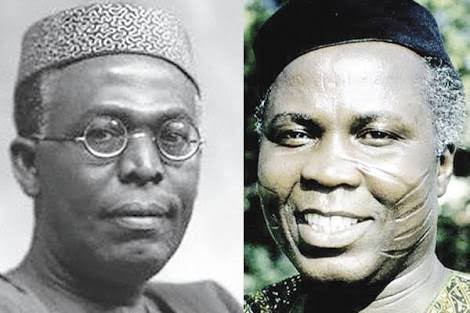
    Obafemi Awolowo and Ladoke Akintola were two of Yoruba, Western Nigeria’s prominent politicians of the nationalist and first-era post-Independence periods, circa 1940s to 1966. Awolowo’s prominence lasted up till his death in 1987, so he had more political mileage than Akintola that got killed at the end of that period.

    Few years before Nigeria’s Independence in 1960 and until 1966, Nigeria had regions as subnational political and administrative divisions. One of those regions was the Western region, majority populated by the Yoruba ethnic group. Awolowo happened to be first premier of the Western region as his party (Action Group, AG) had majority of the seats in the regional parliament. Akintola would become his deputy and successor when Awolowo moved up to the central government to be opposition leader. Awolowo remained the leader of AG; Akintola, the deputy leader, but premier of the region the party ruled.

    So what was the fight about and how did they get themselves in the moon?

    Both men fell out in the course of their respective stints as leaders of AG and premiers of Western region. History says both men had differing views about how the politics of the region should run, especially in respect to political alignments with other equally largely ethnic parties that ruled other regions, but had to be contended with in the political calculations of the Nigerian central government based in Lagos. We learned that Akintola wanted to align with the party that had the bigger stakes in the central government, Northern People’s Congress (NPC). Awolowo had other ideas.

    Things got to a head when Akintola was suspended from the party through the machinations and influence of his boss, who obviously was more popular within their party. Akintola was also momentarily removed as premier, but he got his post back with the help of his central government allies. Akintola soon broke away from the AG, and formed his own party which would win a controversial regional election in the year 1965.

    In the heat of the political imbroglio which birthed the notorious operation wetie (operation wet it) in which a lot of arson was committed by supporters of both politicians, there arose different urban legends about Awolowo and Akintola and how they were trying to outdo each other, even with the help of the extraterrestrials, in the supremacy battle.

    One of such legends was the moon battle.

    Because it appeared that two people were interlocked in the moon crescent, some people (most of them now parents, grandparents and great grandparents) ascribed the presumed two figures to be Awolowo and Akintola. It was said that both men had travelled there to combat each other. The legend definitely resonated with a lot of people in Southwest, many of whom were in awe of the larger-than-life postures of the two Yoruba political leaders. And curiously they passed on this incredible legend to generations after them.

    What other urban legends or myths do you know about?